TL;DR
A leaking boiler pipe can range from a slow weep you can monitor to a genuine emergency if water is spraying, pooling near electrics, or your pressure gauge is dropping fast. The safest first steps are to isolate the water at the stopcock if you can do so safely, switch off the boiler, contain the leak with towels or a bucket, keep wet hands away from anything electrical, and then get in touch through our contact form, marking the request as urgent so we can prioritise it.
How serious is it — a quick decision tree
A slow weep or drip from a joint. A few drops a minute, water beading on the fitting, no spray, the area around it stays mostly dry. This can usually wait for a scheduled visit, but shouldn’t be ignored — place a towel or small container underneath, monitor it, and book an inspection.
An actively spraying or fast-running leak. Water jetting out, a steady stream, or a puddle spreading quickly underneath. Isolate the water at the stopcock straight away, switch off the boiler, contain what you can, and mark your contact-form submission as urgent.
Water anywhere near electrics. Moisture on switches, sockets, the boiler’s control panel, or trailing leads. Don’t touch anything electrical with wet hands. If it’s safe to do so, switch off the electricity at the consumer unit, isolate the water, and treat this as urgent above all else.
When in doubt, treat it as the more serious category and follow the safe actions below — it costs you nothing to be cautious.
What’s urgent versus what can wait
Urgent: water spraying, jetting, or forming a fast-growing puddle; any moisture reaching electrics or the consumer unit; the boiler pressure gauge dropping noticeably while the leak is active; visible damage to walls, ceilings or flooring that could worsen quickly.
Can wait for a booked appointment, but still needs attention: a slow, steady drip that stays contained; no water anywhere near electrics and pressure holding steady; a leak isolated to a non-critical area, such as an external pipe run, that isn’t affecting your heating or hot water. Even in this category, log it and get it looked at within a reasonable timeframe rather than letting it run indefinitely.
What to do right now
- Find and turn the stopcock. In most Slough homes this is under the kitchen sink, in a downstairs cloakroom, or near the water meter. Turn it clockwise until it stops. If it’s stiff or you can’t reach it safely, don’t force it — move on to the next steps and mention the difficulty when you contact us.
- Switch off the boiler at its power switch to cut the electrics and stop the pump forcing water through the leak.
- Contain the water with towels, a bucket, or a tray, changing them as needed.
- Keep electrics dry. Never touch switches, sockets or the control panel with wet hands. If water has already reached electrics, isolate the electricity at the consumer unit before doing anything else.
- Report it as urgent through our contact form at /contact/, describing where the leak is, how fast it’s running, whether electrics are involved, and what you’ve already done. That lets us prioritise properly and bring the right parts.
Why even a small leak shouldn’t be ignored
A tiny weep rarely stays tiny. Persistent moisture accelerates corrosion on steel pipework and encourages limescale to build up where water evaporates, weakening the joint further over time. Every leak also loses system pressure, which means the boiler fires more often to maintain temperature — extra wear on the pump and heat exchanger, and eventually a low-pressure fault, the kind covered in our guide to why your boiler keeps losing pressure. Water that seeps into plaster, flooring or insulation also creates the damp conditions mould needs, a particular concern in older 1930s-60s Slough properties where ventilation can be limited. What looks like a nuisance drip today can become a burst joint during a heating cycle, and a burst is a far more disruptive and costly repair than catching the same fault early.
Getting help fast
If this has happened during what feels like a genuine emergency — a fast leak, water near electrics, or no heating and hot water as a result — our emergency plumber Slough guide covers what to expect and how quickly we can respond. For the leak itself, the way to report an urgent leak is the same online form used throughout this site; there’s no phone line to hunt for, just fill in what’s happening and mark it urgent, and our Slough-based team will prioritise accordingly.
Frequently Asked Questions
Is a leaking boiler dangerous? It depends what’s leaking and where. A slow weep from a joint is a maintenance issue to get looked at; water reaching electrical fittings, a fast spray, or a leak that’s visibly dropping your boiler’s pressure is more serious and should be treated as urgent.
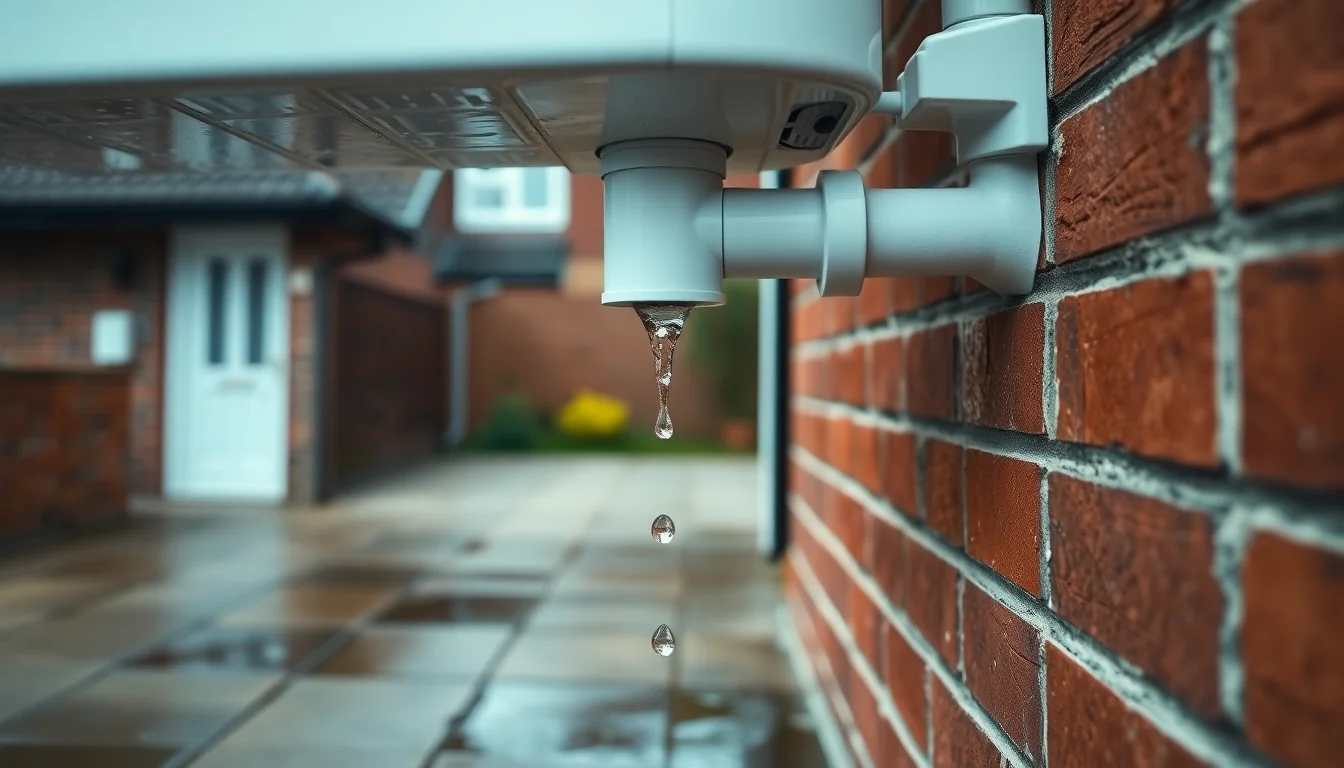
What’s the difference between an overflow pipe dripping outside and the boiler itself leaking? An overflow, or pressure relief, pipe dripping outside the property — usually near ground level — is often a sign of a pressure or expansion-vessel fault inside the boiler, rather than a leak in the pipe itself. The pipe is simply where the excess water is escaping to.
Can I use a boiler that’s leaking? A minor weep that’s being monitored and contained can sometimes run for a short while until it’s checked. But any leak near electrics, a fast-running leak, or one causing pressure to drop noticeably means the boiler should be switched off until a plumber has looked at it.
What does a leaking condensate pipe mean? The condensate pipe carries away the acidic waste water a modern condensing boiler produces. A leak or blockage there is a plumbing job in its own right, and in cold weather a frozen condensate pipe is a common cause of a boiler cutting out entirely.